This page is being used as a notebook. You can learn amazing facts with MSI.
Nantucket Blob
Get link
Facebook
X
Pinterest
Email
Other Apps
Nantucket Blob
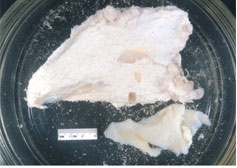
The Nantucket Blob was a globster that washed ashore on Nantucket Island, Massachusetts, in November 1996. Analysis of samples in 2004 suggests that the Nantucket Blob was a large mass of adipose tissue from a whale.
Richat Structure The Richat Structure, also called Guelb er Richât is a prominent circular geological feature in the Sahara's Adrar Plateau, near Ouadane, west–central Mauritania, Northwest Africa. In the local dialect, Richat means feather and it also is known locally in Arabic as tagense. Tagense refers to the circular opening of the leather pouch used to draw water from local wells. It is an eroded geological dome, 40 kilometres (25 mi) in diameter, exposing sedimentary rock in layers which appear as concentric rings. Igneous rock is exposed inside and there are spectacular rhyolites and gabbros which have undergone hydrothermal alteration, and a central megabreccia. The structure is also the location of exceptional accumulations of Acheulean archaeological artifacts.
What is the true meaning of graffiti? graffiti, the form of visual communication , usually illegal, involves the unauthorized marking of public space by an individual or group. Graffiti can be understood as antisocial behavior performed to gain attention or as a form of thrill-seeking, but it also can be understood as an expressive art form. Where is graffiti legal in the US? Venice, California , United States. The Venice Graffiti Pit located in Venice Beach is world-famous for being an open and creative space for street artists. Why does graffiti have a bad reputation? Graffiti's bad reputation can harm your local community in several ways. Having developed negative undertones with gang culture and hate crime , the appearance of graffiti alone can be enough to instill fear into your neighborhood. What is graffiti in simple words? Graffiti is marks , scratching, or drawings made on a surface in a public place. It is often created with paint or spray paint (paint...
Palmyra Atoll Palmyra Atoll also referred to as Palmyra Island, is one of the Northern Line Islands (southeast of Kingman Reef and north of Kiribati). It is located almost due south of the Hawaiian Islands, roughly one-third of the way between Hawaii and American Samoa. North America is about 3,300 miles (5,300 kilometers) northeast and New Zealand the same distance southwest, placing the atoll at the approximate center of the Pacific Ocean. The land area is 4.6 sq mi (12 km2), with about 9 miles (14 km) of sea-facing coastline and reef. There is one boat anchorage known as West Lagoon, accessible from the sea by a narrow artificial channel. It is the second-to-northernmost of the Line Islands, and one of three American islands in the archipelago, along with Jarvis Island and Kingman Reef. Palmyra Atoll is part of the Pacific Remote Islands Marine National Monument, the world's largest marine protected area. The atoll is composed of submerged sand flats along with dry land and reef...


Comments
Post a Comment